
From the 30 Sensex companies, IndusInd Bank, Zomato, Larsen & Toubro, Titan, Mahindra & Mahindra, Bajaj Finance, Reliance Industries, Kotak Mahindra Bank, Tech Mahindra and Tata Consultancy Services were among the laggards. On the other hand, Power Grid, Hindustan Unilever, Infosys, Nestle India, Asian Paints, ITC, Sun Pharmaceuticals and ICICI Bank were the gainers.

The commerce ministry is working on different scenarios to assess the possible fallout of reciprocal tariffs to be imposed by the US administration on April 2 on its key trading partners including India, sources said. US President Donald Trump has said that April 2 will be 'Liberation Day' as he plans to announce tariffs or import duties to bring down America's trade deficit, and promote the country's manufacturing.

From the Sensex pack, Asian Paints, NTPC, Reliance Industries, Tata Steel, Bajaj Finserv, Hindustan Unilever, Sun Pharmaceuticals, Adani Ports & SEZ, Axis Bank, Tata Consultancy Services, Titan and Bajaj Finance were the major gainers. Tech Mahindra, Kotak Mahindra Bank, Zomato, Tata Motors, and IndusInd Bank were the laggards.
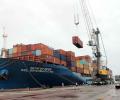
Industry associations and companies in the United States, including the US Chamber of Commerce, Coalition of Services Industries and the iconic bike company Harley Davidson have called on the Donald Trump dispensation to push India to reduce tariffs, non-tariffs, and regulatory barriers to boost American exports.

Tata Steel was the biggest loser in the Sensex pack, sliding 8.59 per cent, followed by Tata Motors, Larsen & Toubro, Adani Ports, IndusInd Bank, Tech Mahindra, Reliance Industries, Sun Pharmaceutical, HCL Technologies, Tata Consultancy Services, Infosys, and NTPC, were the major laggards. On the other hand, Bajaj Finance, HDFC Bank, Nestle India, ICICI Bank, ITC, Asian Paints and Axis Bank were among the gainers.

Investors should tilt their portfolios towards domestic-facing defensive sectors, which should help provide stability and shield them from geopolitical and tariff risks.
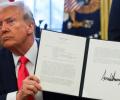
The sweeping tariffs proposed across sectors by US President Donald Trump are scheduled to be imposed starting April 2, with most analysts worried about their impact on companies, and in turn the financial markets. Recently, the US administration signaled that it will impose sectoral tariffs on energy, pharmaceuticals, semiconductors, agriculture, copper, and lumber.


India now has 284 billionaires, 13 more than last year, maintaining its position as the third-largest dollar-billionaire hub globally, after the US and China.

Trump may temper his approach from time to time, but to think that he will change his basic philosophy is delusional, asserts T T Ram Mohan.

Dr Ganesh Natarajan, a special guest on rediffGURUS, has been addressing questions from Rediff readers, about how to grow professionally, how women can achieve leadership roles in Indian companies, and what it takes to succeed as an entrepreneur.

After Chennai, it is Coimbatore, Madurai, and Tiruchirappalli, that are emerging as manufacturing hubs. Coimbatore is India's top Tier-II city in terms of the number of GCCs, according to a report by Cushman & Wakefield.
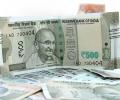
Raising overseas debt has become prohibitively expensive due to the depreciating rupee.
Moody's Ratings on Tuesday said India has a lower overall exposure to the US relative to others in the APAC region, although certain sectors such as food, textiles and pharmaceutical products face risks. Moody's said most companies in its rated portfolio are domestic-focused with limited exposure to the US market.

From the Sensex pack, UltraTech Cement, Mahindra & Mahindra, Sun Pharmaceutical, Zomato, Tech Mahindra, Tata Steel, Tata Motors, Titan, ITC and Bajaj Finance were the major gainers. In contrast, Kotak Mahindra Bank, HCL Technologies, PowerGrid, Reliance Industries, State Bank of India, Hindustan Unilever, IndusInd Bank, Nestle India and Axis Bank were among the laggards.

From the 30 Sensex companies, Zomato, Tata Motors, IndusInd Bank, Asian Paints, Bajaj Finance, Maruti Suzuki India, Adani Ports, Hindustan Unilever, Reliance Industries, Bajaj Finserv, UltraTech Cement and Infosys were among the laggards. In contrast, State Bank of India, ICICI Bank, Tata Steel, NTPC, Tata Consultancy Services, PowerGrid, Kotak Mahindra Bank and Sun Pharmaceuticals were the gainers.

From the Sensex pack, Nestle India, HCL Technologies, Tech Mahindra, Bharti Airtel, Titan, Infosys, Asian Paints, NTPC, Bajaj Finserv and Sun Pharmaceuticals were among the laggards. State Bank of India, IndusInd Bank, Zomato, Power Grid, ICICI Bank, Tata Motors, Mahindra & Mahindra, Tata Consultancy Services and Adani Ports were the gainers.

India is home to more than 100 million diabetics, and the demand for anti-diabetic drugs is on the rise -- the Rs 20,611 crore anti-diabetic drug market in India is growing at 9 per cent or so.

From the Sensex pack, IndusInd Bank, Infosys, Bajaj Finserv, Mahindra & Mahindra, Zomato, Hindustan Unilever, Power Grid, Axis Bank, UltraTech Cement, Adani Ports, and Tata Consultancy Services were among the laggards. On the other hand, Sun Pharmaceuticals, ICICI Bank, Bharti Airtel, HCL Technologies, Maruti Suzuki India, Larsen & Toubro, Reliance Industries, Kotak Mahindra Bank and Titan were the gainers.

Drug shortages in the US are at an all-time high, and price erosion has stabilised, which could benefit Indian pharmaceutical (pharma) companies with a US focus, according to analysts. Nuvama Research analysts said that US price erosion seems to have normalised to its old levels of 6-8 per cent and volumes are picking up with easing of inventory. Similarly, an ICICIdirect analyst noted: "Price erosion intensity has now moderated to a single digit and is expected to tone down a
Analysts are expecting pharmaceutical companies to post sales growth of 10-11 per cent in the second quarter this financial year while the Ebitda (earnings before interest, tax, depreciation, and amortisation) margins are anticipated to improve by about 110 basis points. Ebitda improvement will be led by lower input costs because prices of active pharmaceutical ingredients (APIs) are 5-15 per cent lower year-on-year (Y-o-Y). Axis Capital said sales growth would be around 10 per cent, of which growth in the India market would be 11 per cent or so.

From the Sensex pack, Tata Consultancy Services, HCL Technologies, Tech Mahindra, Infosys, Tata Motors, Bajaj Finance, Kotak Mahindra Bank, Mahindra & Mahindra, Bharti Airtel and Maruti Suzuki India, Tata Steel were the major laggards. PowerGrid, Sun Pharmaceuticals, UltraTech Cement, NTPC, Asian Paints, Nestle India, Titan, IndusInd Bank and Axis Bank were among the gainers.
There remains a debate on who said this: "When the facts change, I change my mind. What do you do, Sir?" Was it the British economist John Maynard Keynes or the American economist Paul Samuelson. Irrespective of who said it, this sentiment appears to have found resonance in ITC's boardroom in recent years.

The top 300 pharmaceutical brands in the country will now bear a quick response (QR) code on their packaging to rein in spurious drugs and ensure better traceability.
From the Sensex pack, Reliance Industries, Bajaj Finserv, HDFC Bank, Adani Ports, Maruti Suzuki India, Axis Bank, Hindustan Unilever, Sun Pharmaceuticals and Asian Paints were among the laggards. Reliance Industries fell the most by 2.38 per cent to close at Rs 1,171.10 apiece.

The Budget 2025-26 meets the expectations of fiscal consolidation, maintaining capital expenditure, and boosting consumption through tax cuts.
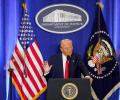
Unless something changes, Mr Trump is a huge threat right now, which is perhaps not being recognised fully, cautions Debashis Basu.

'As the global economy undergoes significant transformations in 2025, India's ability to navigate the complexities of trade wars, financial realignments, and emerging blocs will be pivotal,' explain Harsh V Pant and Soumya Bhowmik.
Domestic benchmark equity indices may see a positive trading sentiment on Friday thanks to a spectacular rally in world markets after the US President Donald Trump announced to put tariff hikes on hold for 90 days, excluding China from the reprieve. Indian stock markets were closed on Thursday for Shri Mahavir Jayanti. Trump has declared a three-month pause on reciprocal tariffs on non-retaliating countries marking a rather unexpected U-turn after record high levies he imposed led to global stock market meltdown.
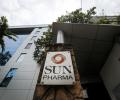
Around six weeks ago, Sun Pharmaceutical Industries, India's largest drugmaker, suffered a setback, which led to a selloff in the share. The US District Court of New Jersey granted Incyte's request for a preliminary injunction against Sun Pharma's launch of Leqselvi, a drug that treats alopecia.

Artificial Intelligence, innovation and next-generation technologies figured prominently during the high-stakes discussion between Prime Minister Narendra Modi and US President Donald Trump at the White House, as the two sides announced transformative measures, including the US-India TRUST initiative, roadmap on accelerating AI infrastructure and INDUS Innovation, to boost tech ties.

Here is a list of Q & As to explain these issues and implications of the US move.
Drug major Sun Pharma is recalling over 34,000 bottles of a generic medication, used to treat high blood pressure, in the US market due to failed dissolution testing. As per the US Food and Drug Administration's Enforcement Report, the US-based arm of Sun Pharmaceutical Industries is recalling lots of Diltiazem Hydrochloride extended-release capsules which are used to treat angina, high blood pressure and some types of irregular heartbeats.

In a big push to the production-linked incentive (PLI) scheme, the government has nearly doubled (increase of 81 per cent) the allocation in five key industry segments from Rs 8,405 crore in the Revised Estimate of FY24 to Rs 15,198 crore in the Interim Budget for FY25. The segments cover over eight PLI schemes, including mobile phones, IT hardware, pharma (PLIs for medical devices, intermediates and pharmaceuticals), food processing, telecom hardware and, auto and auto components. In FY24, DPIIT officials, however, said that the disbursements would be much higher at around Rs 11,000 crore than what has been budgeted for the year.

Amit A Shah holds a stake in 180 listed entities, according to data disclosed in his election affidavit.
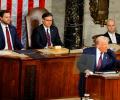
I'...additional concessions, such as opening government procurement, reducing agricultural subsidies, weakening patent protections, and allowing unrestricted data flows -- demands India has resisted for decades.'

In May, price growth for drugs was in negative territory at (-)1 per cent
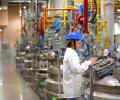
Indian pharmaceutical companies have made major strides in adhering to stringent US Food and Drug Administration (USFDA) norms in 2024, with data suggesting a decline in the number of adverse classification outcomes of inspections across biologics, drugs, and devices. In 2023, the USFDA conducted 225 inspections, which led to 18 cases of Official Action Indicated (OAI) and 117 cases of Voluntary Action Indicated (VAI).

Foreign direct investment (FDI) inflows into India have crossed the $1 trillion milestone in the April 2000-September 2024 period, firmly establishing the country's reputation as a safe and key investment destination globally. According to data from the Department for Promotion of Industry and Internal Trade (DPIIT), the cumulative amount of FDI, including equity, reinvested earnings and other capital, stood at $1,033.40 billion during the said period.
